


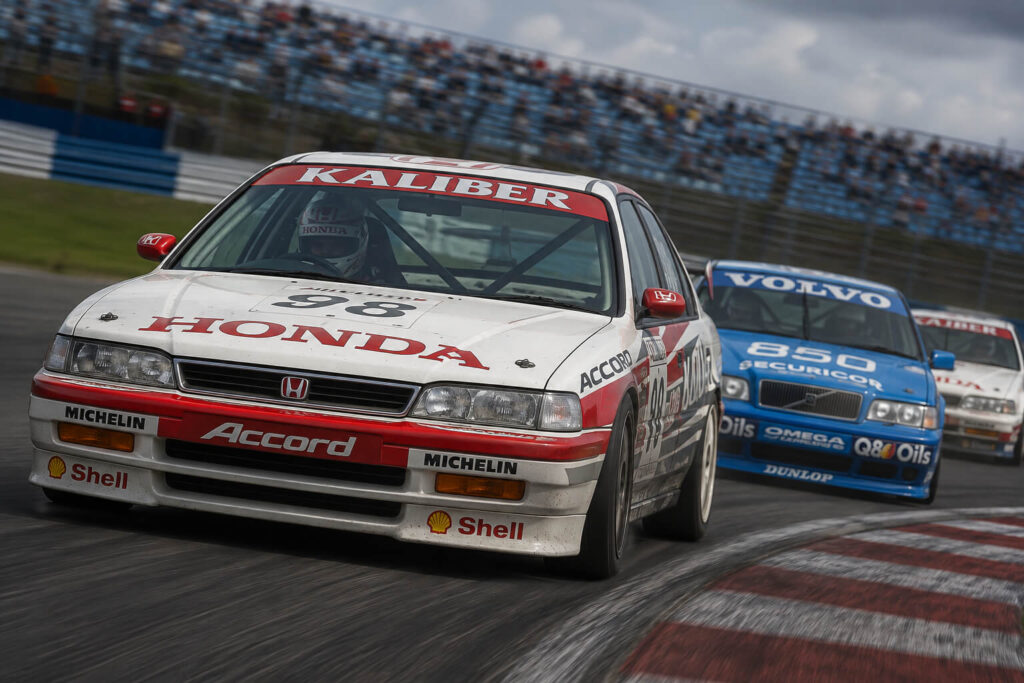
There are racing games that were technically impressive for their time, and then there are games people can still remember almost corner by corner decades later. TOCA 2: Touring Cars sits firmly in the second group.
Codemasters released the sequel during an extraordinary period for racing games. Gran Turismo was changing what players expected from console simulations, Colin McRae Rally was giving rally fans something dangerously addictive, and the original TOCA had already proven that British touring cars could work brilliantly on a PlayStation.
TOCA 2 arrived and somehow made that formula even better.
It wasn’t enormous. It wasn’t packed with hundreds of cars. There was no open world, endless cosmetic customization or seasonal battle pass demanding attention every Thursday evening. What it had was touring car racing that felt fast, physical and just slightly hostile.
And that was enough.
TOCA 2 Captured What Made Touring Cars Brilliant
The appeal of TOCA 2 becomes much easier to understand if you’ve watched British Touring Car Championship racing from the late 1990s.
These weren’t exotic prototypes disappearing into the distance. They were recognizable saloon cars being hurled around circuits with very little concern for personal space. Ford Mondeos, Nissan Primeras, Renault Lagunas, Honda Accords and other familiar machinery suddenly looked like serious racing weapons.
Codemasters understood the attraction.
TOCA 2 was based around the 1998 British Touring Car Championship season and leaned heavily into that atmosphere. Instead of simply putting cars on recognizable tracks and calling the job finished, it tried to recreate the scrappy personality of touring car racing itself.
Cars rubbed panels. Mistakes mattered. Damage mattered.
A race could become messy incredibly quickly, which was precisely the point.
The Damage System Made Every Race Feel Dangerous
One thing that’s easy to forget about late-’90s racing games is how unusual convincing vehicle damage still was.
Gran Turismo became famous for its huge car collection and increasingly serious approach to driving, but visible and mechanical damage wasn’t really part of the experience. TOCA went in another direction.
Hit something hard enough in TOCA 2 and you knew about it.
That changed how races felt. Contact wasn’t simply a graphical effect followed by another flawless lap. A bad decision could make the rest of your race miserable. Sometimes it ended the race completely.
The damage system wasn’t sophisticated by modern simulation standards, obviously. Nobody is confusing a PlayStation game from 1998 with today’s physics engines. But the consequences created tension, and tension is much harder to replace with prettier graphics than developers sometimes seem to think.
Knowing that one stupid move could ruin everything made overtaking more satisfying.
It also made deliberately punting somebody into the scenery much funnier.
TOCA 2 Didn’t Need Hundreds of Cars
Modern racing games often sell scale.
Hundreds of vehicles. Huge maps. Car collections so large that you’ll probably spend half an evening scrolling through menus trying to remember why you opened the garage in the first place.
TOCA 2 came from a different design philosophy.
The cars mattered because you raced them repeatedly. You learned what they could tolerate. You started recognizing circuits instead of merely visiting them. Championships gave individual races context because everything contributed toward something.
Codemasters also expanded beyond the main touring car championship with support racing categories, including machinery from Formula Ford and Ford Fiesta racing.
It didn’t feel like somebody had dumped a gigantic automotive database onto a disc.
It felt like a racing weekend.
There’s a difference.
The Circuits Had Personality
TOCA 2 also benefited from something British motorsport has never struggled to provide: circuits with character.
The game took players around recognizable UK tracks rather than filling its calendar with anonymous fantasy locations. That naturally helped its authenticity, but it also gave TOCA 2 a distinctly different atmosphere from many racing games being released alongside it.
The tracks weren’t always wide, forgiving playgrounds.
There were awkward braking zones, cramped battles and corners where being slightly too ambitious could turn a promising race into an embarrassing collection of damaged body panels.
That slightly rough quality suited the cars perfectly.
TOCA 2 wasn’t trying to make motorsport look glamorous. It made it look stressful.
Much better.
Racing Games Were Changing Fast in the Late 1990s
TOCA 2 also happened to appear at exactly the right moment.
The PlayStation era was producing racing games that suddenly felt substantially more ambitious than what had come before. Gran Turismo pushed console racing toward simulation. Codemasters itself was building a reputation through franchises including TOCA and Colin McRae Rally.
TOCA occupied a particularly interesting spot between arcade racing and hardcore simulation.
You couldn’t simply hold the accelerator and bounce off every barrier, but you also didn’t need a racing wheel, telemetry screen and an engineering degree before completing your first lap.
The handling demanded attention without strangling the fun.
That’s a balance plenty of newer racing games are still chasing.
It Was Difficult Without Feeling Pointlessly Complicated
TOCA 2 could be brutally unforgiving.
That’s part of why people remember it.
Progress wasn’t automatically handed over because you’d spent twenty minutes playing. Winning championships required clean driving, consistency and enough patience to avoid destroying your car while trying to make up three positions in one corner.
There was a satisfying stubbornness to the game.
Get something wrong and TOCA 2 generally didn’t explain your feelings back to you through five menus, three tutorials and a motivational voiceover.
You lost.
Try again.
That simplicity gave victories some weight. Finishing a difficult race felt like you’d actually accomplished something rather than completed another item on a gigantic checklist.
The Graphics Are Old. The Racing Isn’t.
Put TOCA 2 next to a modern racing game and, yes, the difference is ridiculous.
Cars are angular. Environments are sparse. Textures belong unmistakably to the first PlayStation generation. Nobody should expect a forgotten 1998 racing game to suddenly look like Forza Motorsport after connecting it to a modern television.
But that’s not really why you’d return to it.
The interesting part is how quickly those limitations stop mattering once the racing starts.
Good racing game design has surprisingly little to do with polygon counts. It comes from constantly giving the player small decisions: brake now or risk it, defend the inside or chase the faster line, attack the car ahead or protect your damaged vehicle.
TOCA 2 keeps asking those questions.
Twenty-eight years later, they’re still good questions.
TOCA 2 Represents a Type of Racing Game We Rarely See Now
There’s also a slightly bittersweet reason TOCA 2 feels special today.
Dedicated touring car games aren’t exactly flooding release calendars.
Modern racing fans can find touring cars inside larger simulations and multi-discipline racing titles, but the era of major licensed games built specifically around championships such as the BTCC feels much further away.
Top Gear recently raised the same question when asking where all the good touring car games had gone, pointing back toward TOCA 2 while discussing how surprisingly rare dedicated touring car titles have become.
Maybe that’s why revisiting TOCA 2 hits differently now.
At the time, it was simply another extremely good Codemasters racing game.
Today it feels like evidence from another version of the industry.
TOCA 2 Still Deserves Its Reputation
Calling any game one of the greatest ever made usually starts an argument within seconds.
Fine. Racing game arguments are half the fun.
TOCA 2 doesn’t have the enormous cultural footprint of Gran Turismo. It didn’t define arcade racing like Out Run. It isn’t the technical simulation modern players would choose for practicing a real racing line.
It doesn’t need to be any of those things.
TOCA 2 understood exactly what kind of racing it wanted to recreate and built almost everything around making that racing exciting.
Cars that felt physical. Circuits worth learning. Damage with consequences. Championships worth winning. No enormous pile of distractions required.
Some games age because technology leaves them behind.
Others become more interesting because modern games stop doing the things they did well.
TOCA 2: Touring Cars belongs firmly in the second category.